This project has been done by ADRL (Architectural Design Reach Lab) which is part of Department of Architecture, Indus Valley School of Art & Architecture. Initiated in 2015, the lab is dedicated to projects within the domain of architecture and urban design. The lead architect of this project is Ira Kazi. She is currently an Assistant Professor and also Head of Architecture department of IVS.
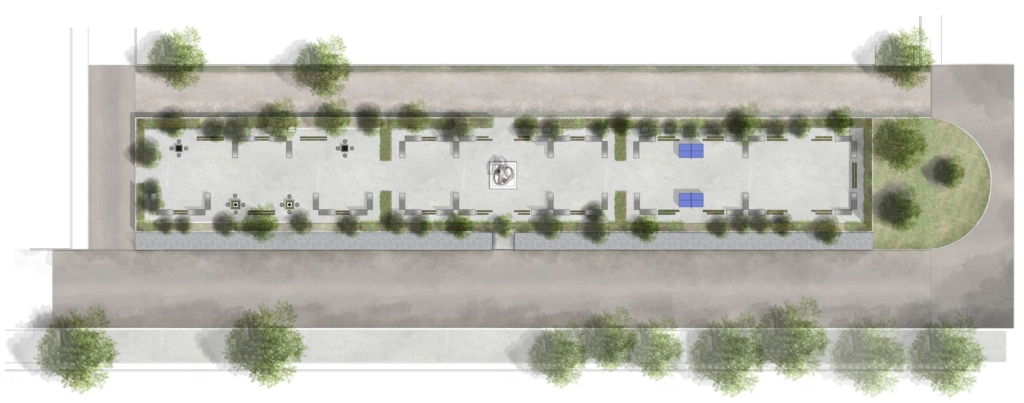
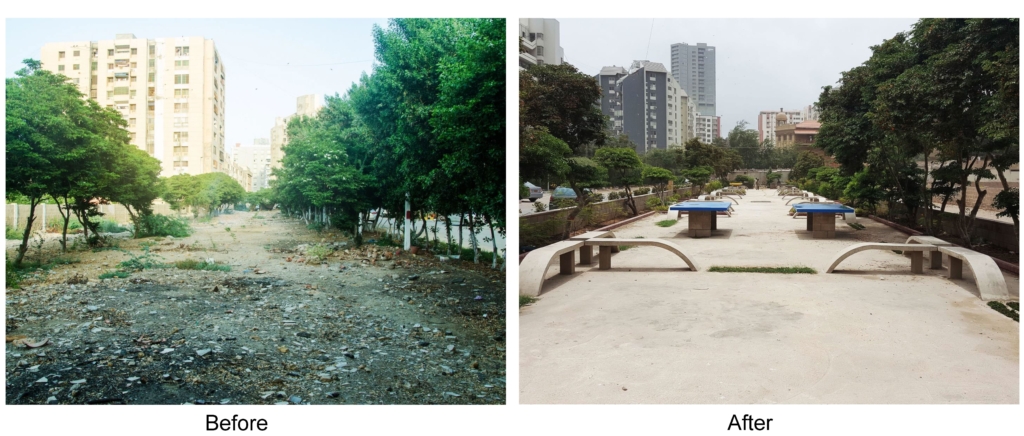
Lignum Park is a neighborhood park located in Clifton, Block 2, Karachi. It lies in the East of Indus Valley School of Art & Architecture. Linear in shape and covering an area of almost 1450 square yards, it is surrounded by three thoroughfares with varying degrees of vehicular traffic. Before the park was built the site served as a rubble and garbage dumping ground. It also served as a refuge for addicts. The two longer sides were already lined with a series of reasonably mature lignum trees providing the site with a natural enclosure which was retained in the proposed design. Hence, the name Lignum Park. Representatives of the community suggested that this new park may very well be designed as a place of interaction, conversations and play for the senior citizens of the neighborhood.
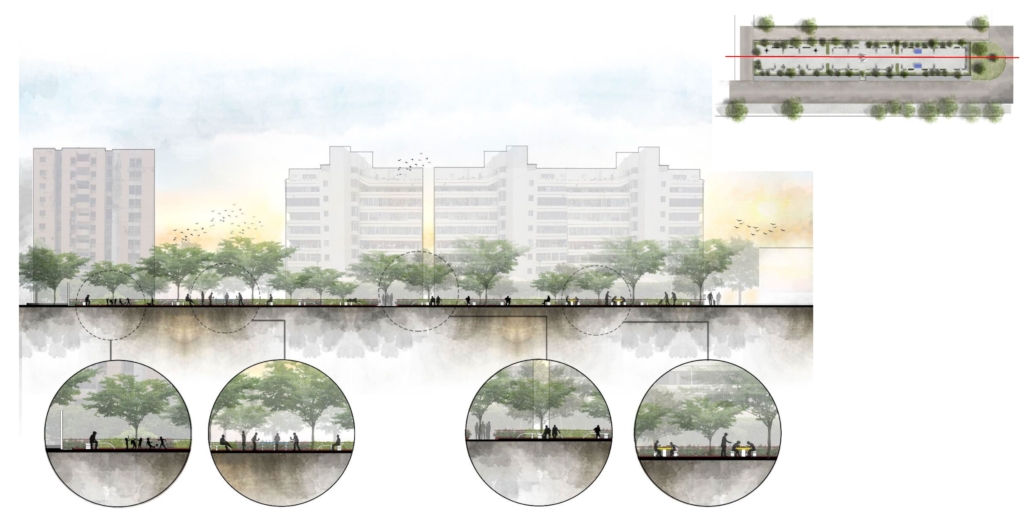
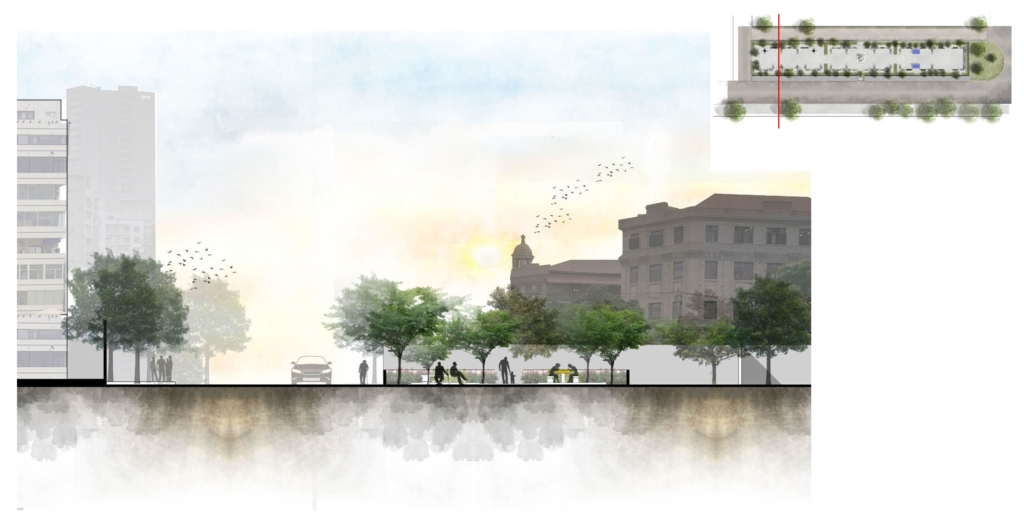
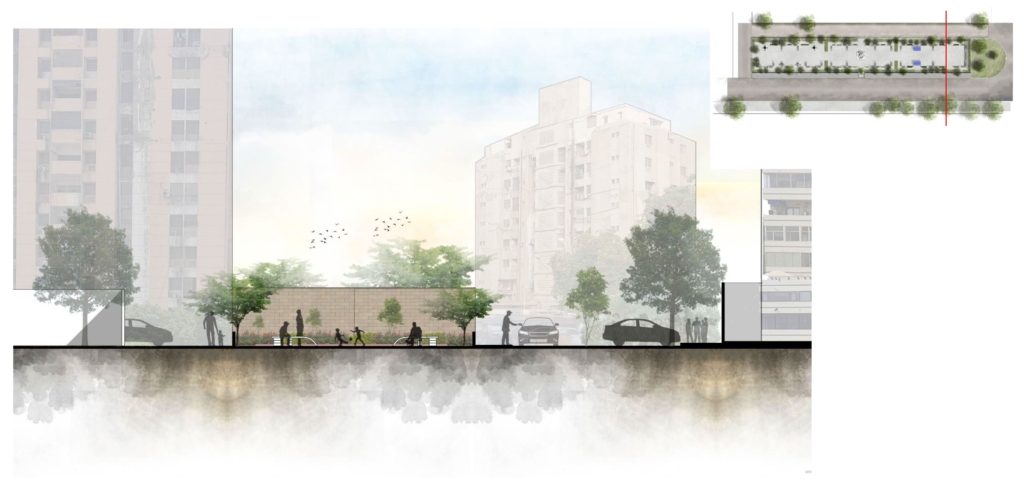
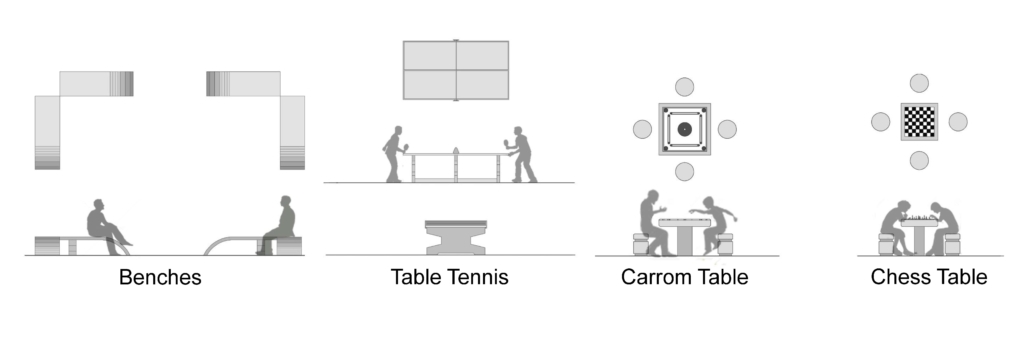
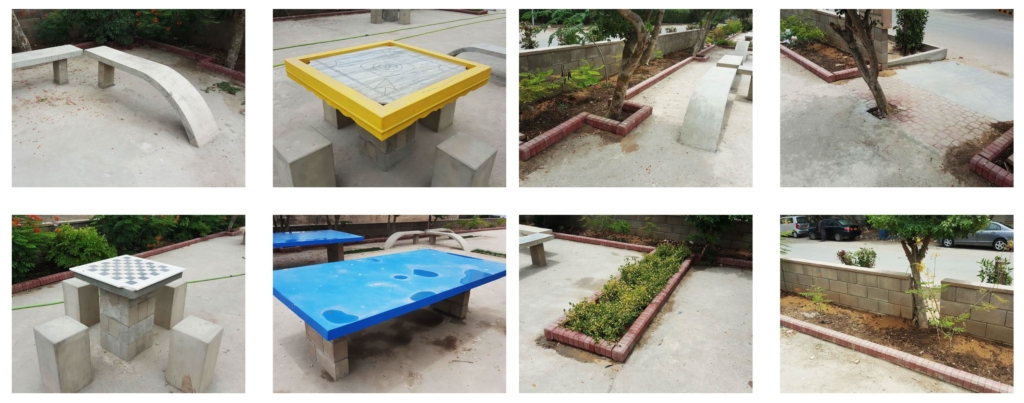
The benches were designed as to appear from the ground. They were proposed in concrete to avoid vandalism and erosion in a very humid climate. Chess and carrom tables were also proposed in concrete for the same reasons. The inside of the walls are lined with planters frequently shifting to accommodate the existing lignum trees. Grass cover was avoided keeping in mind the scarcity of water in the city. Instead, planters and strips of grass were added to not only supplement the green of the trees and plants, but interrupt the continuity of the floor. A feature wall was added in the East end of the site to separate the illegally built toilets. The proposed plant palette consisted of Caesalpinia Pulcherrima and variegated Dum Dum. These plants not only integral to the design but require minimal water to survive. Recycled grey water from the School is utilized to water the vegetation.